Skip to content
Advanced technology

The technology we have at Monaco.

Better images mean earlier diagnosis, shorter appointments and restorations that fit the first time. Here is what is in the practice, and what each piece of it actually does for you.

What we use

Six systems, and what each one changes.

Dr. Sohi invests in equipment for one reason: it changes what she can see, and what she can see decides how well she can treat you. Everything below is in the practice at 1346 Johnston Road. Nothing here is sent out, and nothing is charged as an extra.

Dentsply Sirona

CBCT 3D Scanning

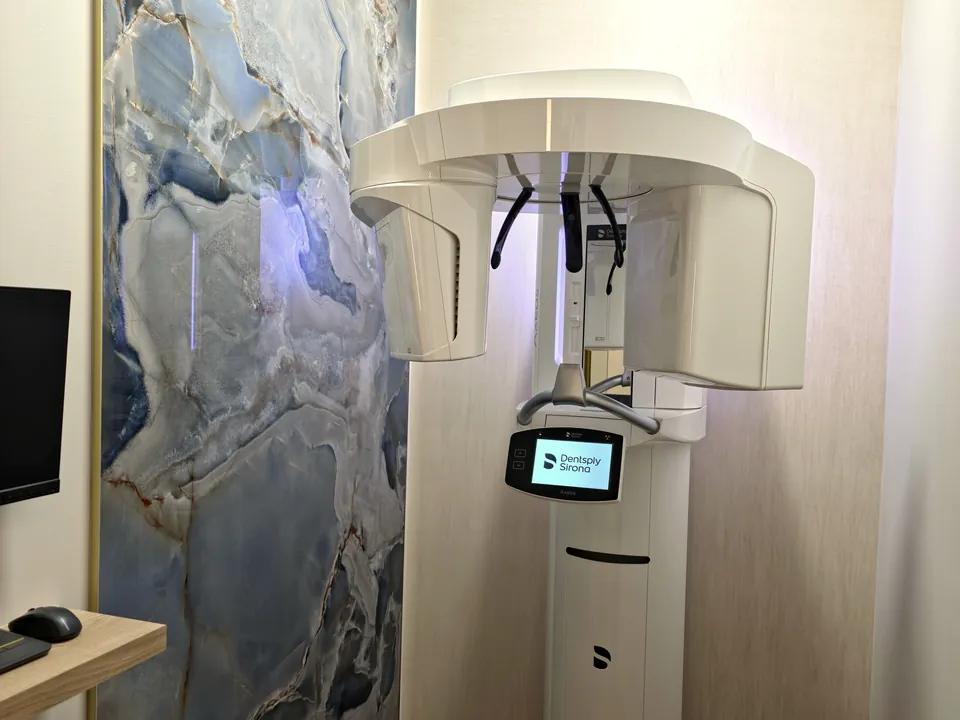
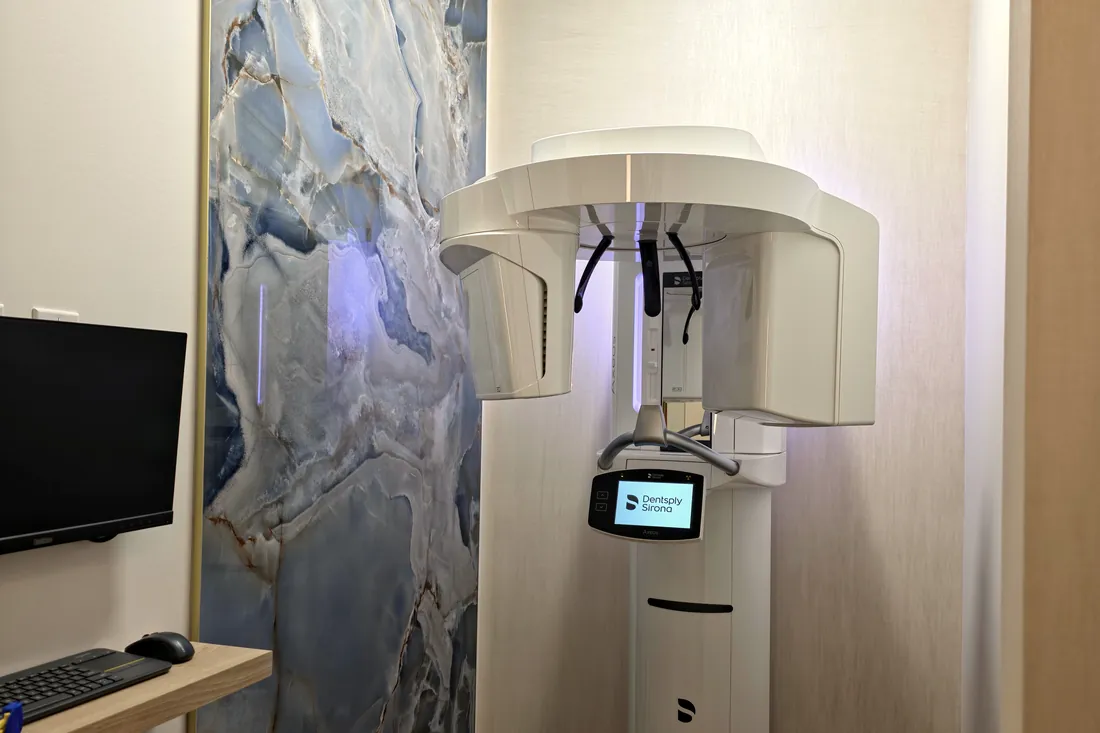
Our Cone Beam CT provides a complete three-dimensional view of your jaw and teeth, which is what makes precise surgical planning and implant placement possible. Instead of guessing at what sits beneath the gum, we can see bone volume, nerve position and sinus anatomy before a single instrument is picked up. It is the difference between planning an implant and hoping one fits.

Digital X-Rays

We use low-radiation digital imaging for detailed diagnostics, with up to 90% less exposure than traditional film. Images appear on the screen beside you in seconds, so you see what we see and we can talk through it together rather than describing it to you. They can be enlarged, compared against previous visits, and sent electronically to a specialist the same day where one is needed.

Dentsply Sirona

Primescan Intraoral Scanner

Say goodbye to messy, uncomfortable impressions. Our digital scanner creates a precise 3D model of your smile in minutes, which means restorations that fit properly the first time, with remarkable comfort. For anyone who has gagged their way through a tray of impression material, this is the single change most likely to alter how you feel about the appointment.

Align Technology

iTero Digital Scanner

The iTero scanner handles our clear aligner work. It captures your teeth digitally for Invisalign planning, and because every scan is stored, it can show you a simulation of the projected result before you commit to treatment, then track the movement at each review against where the plan said you would be. No aligner case starts here on an estimate.

Intraoral Cameras

A small handheld camera that captures close-up images of the concerns affecting your teeth and oral tissues, displayed on the screen in front of you. It is the most straightforward way to make a recommendation make sense: rather than being told there is a crack in an upper molar, you look at it. It also documents a problem area so we can compare it at your next visit and decide whether it is genuinely changing.

Transillumination

Transillumination passes light through the tooth to reveal cracks that do not show on an X-ray. Catching them at an earlier stage lets us prevent the unwanted long-term consequences: chipping, deepening cracks, and eventually fracture of the tooth. A cracked tooth found early is usually a filling or a crown; the same tooth found late is often an extraction.

3D imaging

A complete view before anything begins.

Our Dentsply Sirona cone beam scanner sits in its own room and produces a full three-dimensional reconstruction of your jaw in under a minute. It is the single piece of equipment that most changes what Dr. Sohi can offer in-house: implants, difficult extractions and root canal anatomy are all planned from it rather than referred out.

The scan is quick, you stand still rather than lying back, and there is nothing in your mouth. Most patients are surprised by how undramatic it is.

  • Implant planning against real bone volume
  • Nerve and sinus mapped before surgery
  • Difficult extractions assessed in advance
  • Root and canal anatomy in three dimensions
Dentsply Sirona CBCT 3D imaging unit lit in blue in its own room at Monaco Dentistry
90% Less radiation than film

Techniques and training

Systems Dr. Sohi is trained in.

Equipment is only half of it. These are the two technique systems behind the work the scanners make possible.

  • Dr. Sohi is trained in the Bioclear method, an injection-moulded composite system that closes black triangles and reshapes worn teeth, usually with no drilling at all. It relies on the digital scanning and magnification described above.

    More about Bioclear
  • Membership of the American Academy of Clear Aligners keeps her aligner work current with how the technique is actually developing, rather than with how it was taught once. It is the training behind the iTero planning above.

    More about the American Academy of Clear Aligners

The practice

Where it all lives.

Come and see it
  • Dentsply Sirona CBCT 3D imaging unit in its own room at Monaco Dentistry
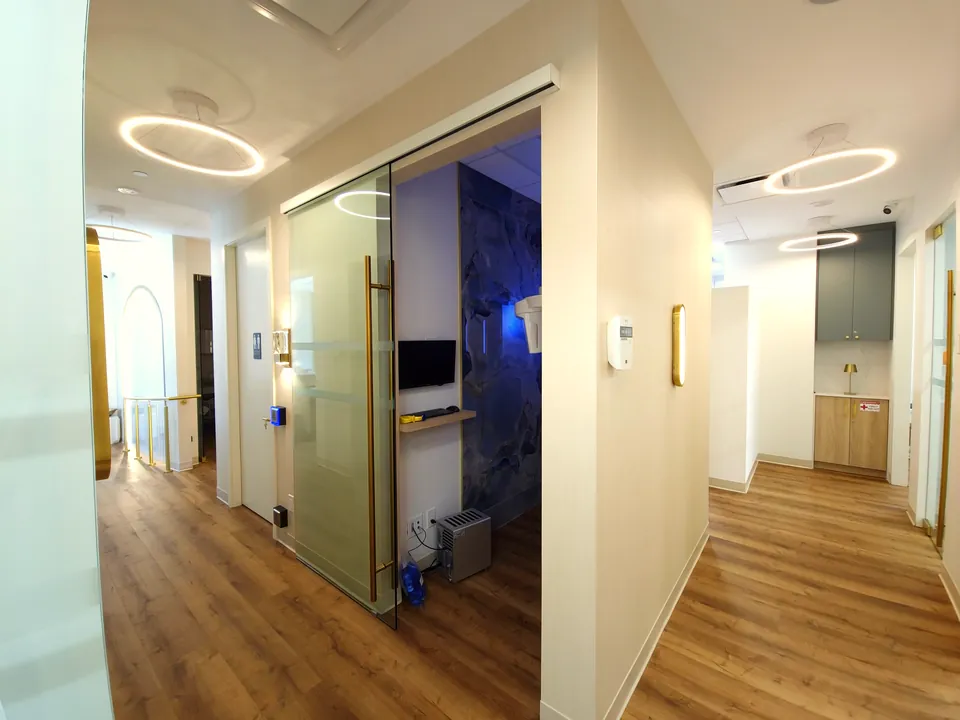
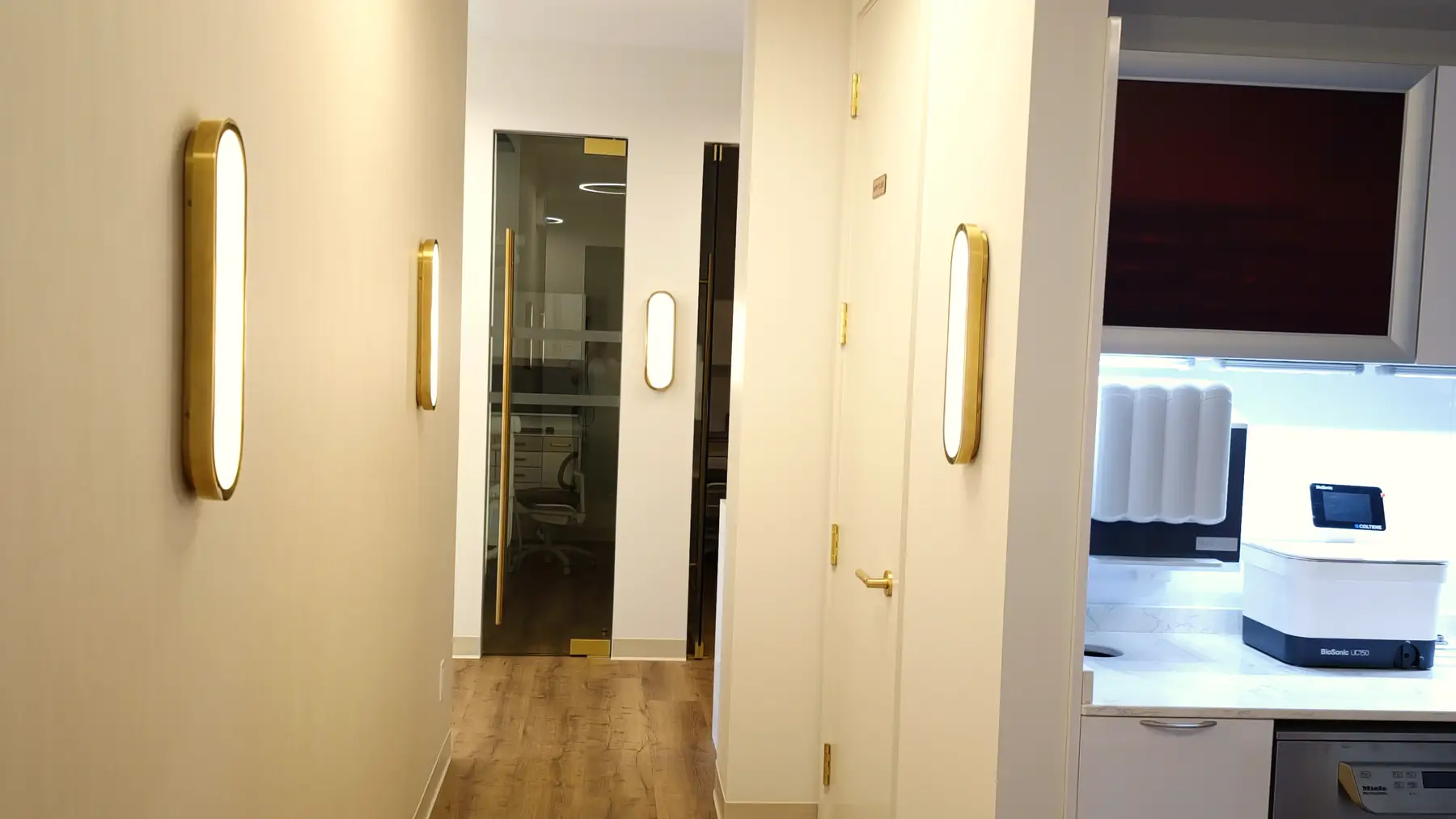
  • Corridor with halo lighting leading to the imaging suite at Monaco Dentistry
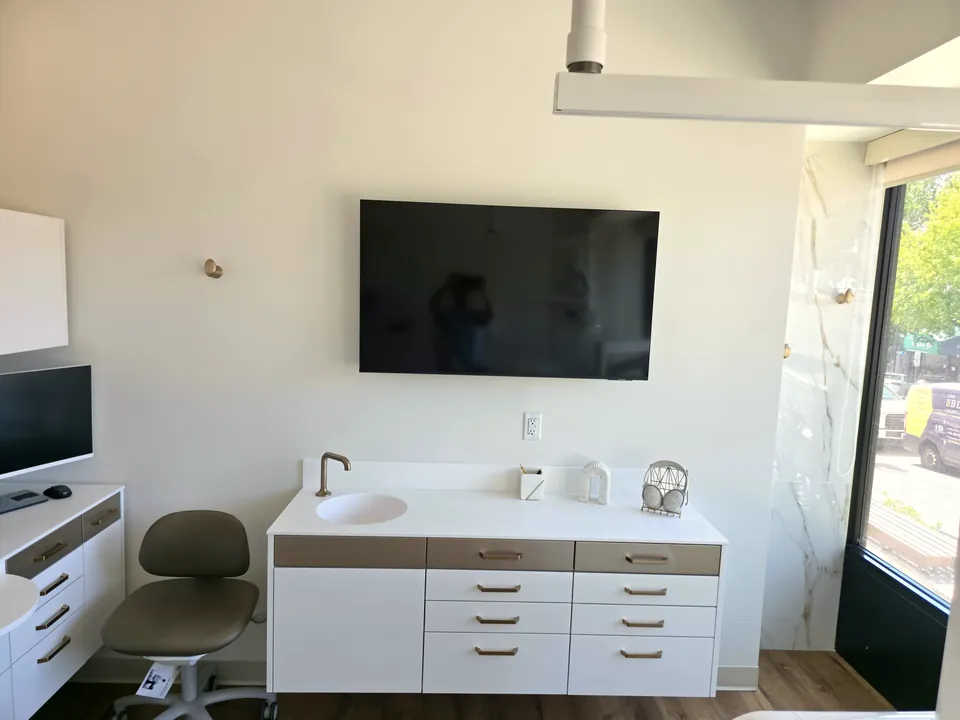
  • Private treatment room with a wall-mounted screen and chairside monitor

Questions

About imaging, scanning and your records.

Is a 3D scan safe? How much radiation is involved?

Our digital imaging uses up to 90% less radiation than traditional film, and a CBCT scan is taken only where the three-dimensional view will change a decision: implant planning, a difficult extraction, or a root that a flat X-ray cannot resolve. We will tell you why a scan is being recommended before it is taken, and you are free to decline it.

Do I still have to bite into a tray of impression material?

No. Our Primescan and iTero scanners replace impressions for crowns, bridges, aligners, nightguards and dentures. A scan takes a few minutes, there is nothing to gag on, and the digital model can be re-used later without scanning you again.

Is any of this charged as an extra?

No. The scanners, the intraoral camera and transillumination are part of how we examine and plan, not add-ons. Imaging is billed under the standard fee guide codes and appears on your written estimate before it is taken.

Can I get copies of my scans and X-rays?

Yes, they are your records. We can send them electronically to you, to a specialist, or to another practice if you move, usually the same day you ask.

Why does it matter that implants are planned on a CBCT?

An implant has to sit in bone of adequate volume, clear of the nerve and the sinus. A two-dimensional X-ray cannot show you the width of the bone or exactly where those structures run. Planning on a 3D scan is what turns implant placement from an estimate into a measurement.

Book an appointment

See the difference good imaging makes.

Book a first visit and we will show you your own scans on the screen beside you. Call (604) 953-9887 or send us a message.