It stays in your mouth
No adhesive, no removing anything at night, and no clasps hooked onto healthy teeth the way a partial denture works.
Single implants, multiple implants and implant-supported dentures planned with on-site 3D imaging, placed and restored under one roof by an AAID member.
Overview
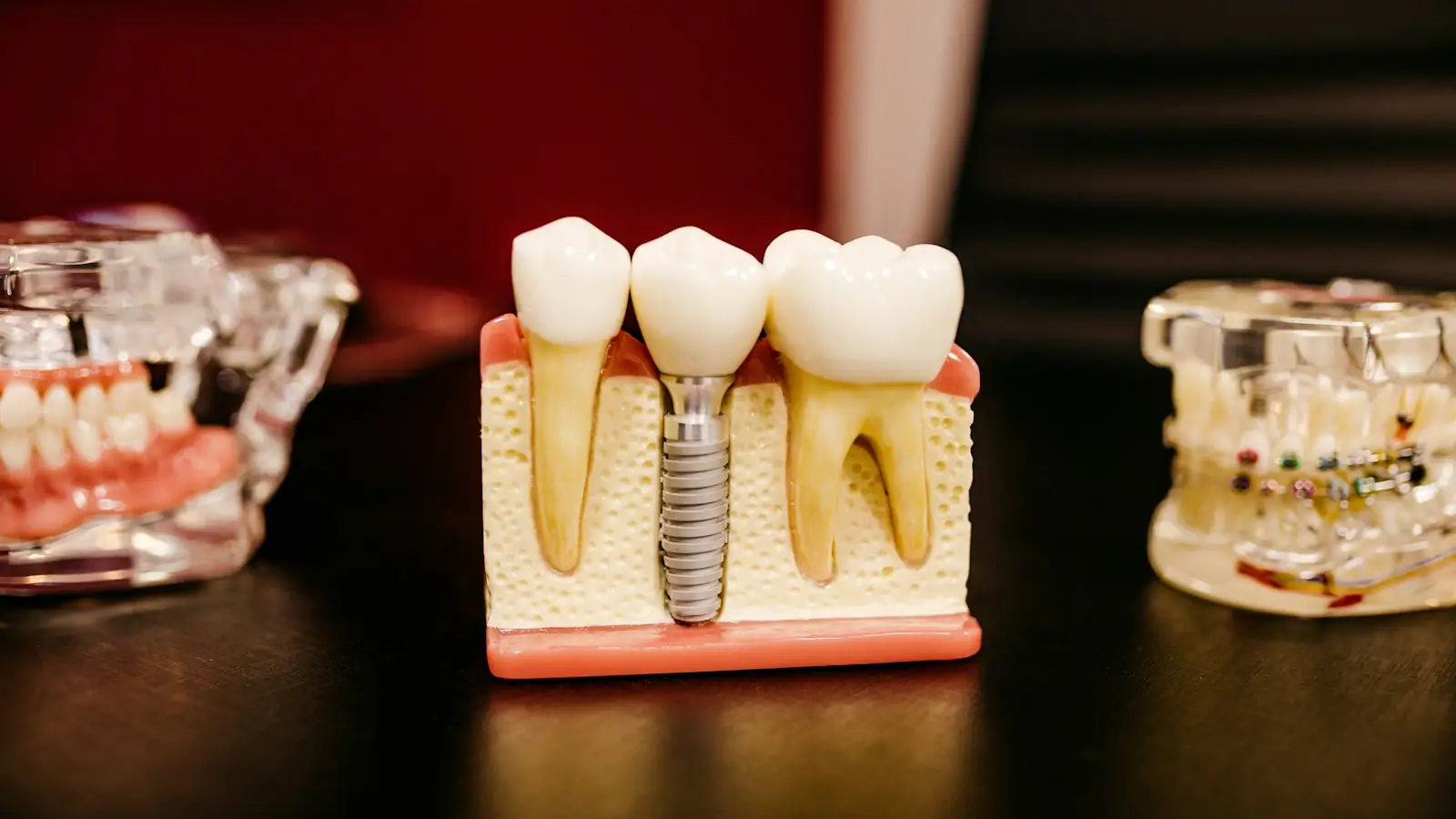
An implant is the closest dentistry gets to replacing a tooth rather than covering the gap. A titanium post takes the place of the root, and the crown on top is shaped and shaded to match its neighbours. Dr. Sohi is a member of the American Academy of Implant Dentistry and both places and restores implants here, so the surgeon and the person designing your final tooth are the same person. That is the usual place plans fall apart.
Book a dental implants consultation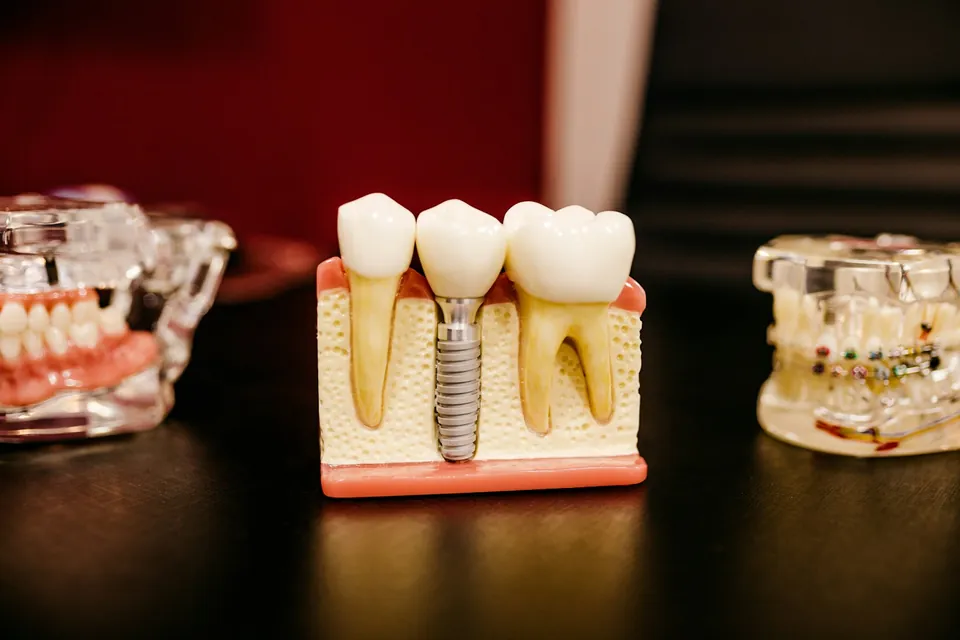
Why it matters
No adhesive, no removing anything at night, and no clasps hooked onto healthy teeth the way a partial denture works.
Unlike a bridge, an implant does not require cutting down the good teeth either side of the gap.
The jaw resorbs where a tooth is missing. An implant loads the bone and slows that loss, which protects your facial shape.
On-site panoramic and 3D imaging maps bone volume and nerve position, so placement is planned rather than improvised.
How it works
Imaging to measure bone height, width and density, plus a review of gum health and bite forces.
Number of implants, timeline, whether grafting is needed, and the full cost, before you commit.
The implant is placed under local anaesthetic, with oral or nitrous sedation available if you want it.
Three to six months while the implant integrates with bone. A temporary tooth bridges the gap where the site is visible.
An impression or digital scan, then a custom crown, bridge or denture attachment shaded to match.
Who it's for
People missing a single tooth, several teeth, or all of them; denture wearers tired of movement; and anyone who has been told a bridge is their only option and wants a second opinion.
Patient stories
“I lost a molar years ago and put it off. The 3D scan and the written plan made the decision easy, and the placement was nothing like I had built up in my head.”
“My lower denture used to move when I ate. Implants holding it in place changed what I can order in a restaurant.”
Questions
The placement itself is done under local anaesthetic and most patients are surprised how straightforward it is. Dr. Sohi's injection technique is the thing patients comment on most. Afterwards expect soreness for a few days, managed with ordinary painkillers. Oral and nitrous sedation are available if the idea of surgery is the hard part.
Usually three to six months from placement to final crown, because the implant needs time to fuse with bone. Grafting adds a few months. You are not without a tooth during that time where the gap is visible.
That is common and often solvable. Bone grafting, sinus lifts and choosing a different implant size or angle all widen who can be treated. The 3D scan tells us definitively rather than guessing.
The implant itself can last decades and often a lifetime; the crown on top is the part that may need replacing at some point. Gum disease and smoking are the two biggest threats, which is why hygiene visits stay part of the plan.
Also available
Bring us your gap, your old bridge or your loose denture and we will scan it and give you a straight answer.