
Knocked-Out Tooth First Aid: What to Do Right Away
Learn knocked-out tooth first aid: when to reinsert a permanent tooth, why to leave a baby tooth out, and how to keep it moist. Act fast and seek emergency dental care.
October 22, 2026
A knocked-out tooth can be frightening. There may be blood, pain, and uncertainty about what to do first. The most useful response is to stay as calm as you can, check for serious injuries, and act quickly.
A permanent tooth can sometimes be placed back into its socket and saved. The chances are generally better when it is replanted immediately, ideally within about 30 minutes. A knocked-out baby tooth needs a different response: it should never be put back into the socket.
This guide explains how to handle the tooth, control bleeding, and get emergency dental care without losing valuable time. If the injury has just happened, start with the steps below rather than waiting to read every section.
The Immediate Steps at a Glance
First, check that the injured person is breathing normally and has no signs of a serious head or facial injury. Then:
Find the tooth and pick it up by the crown, the white part normally visible above the gums. Do not touch the root.
If it is a baby tooth, leave it out. Apply clean gauze to the gum and arrange a prompt dental examination.
If it is a permanent tooth and looks dirty, rinse it briefly and gently. Do not scrub, scrape, or dry it.
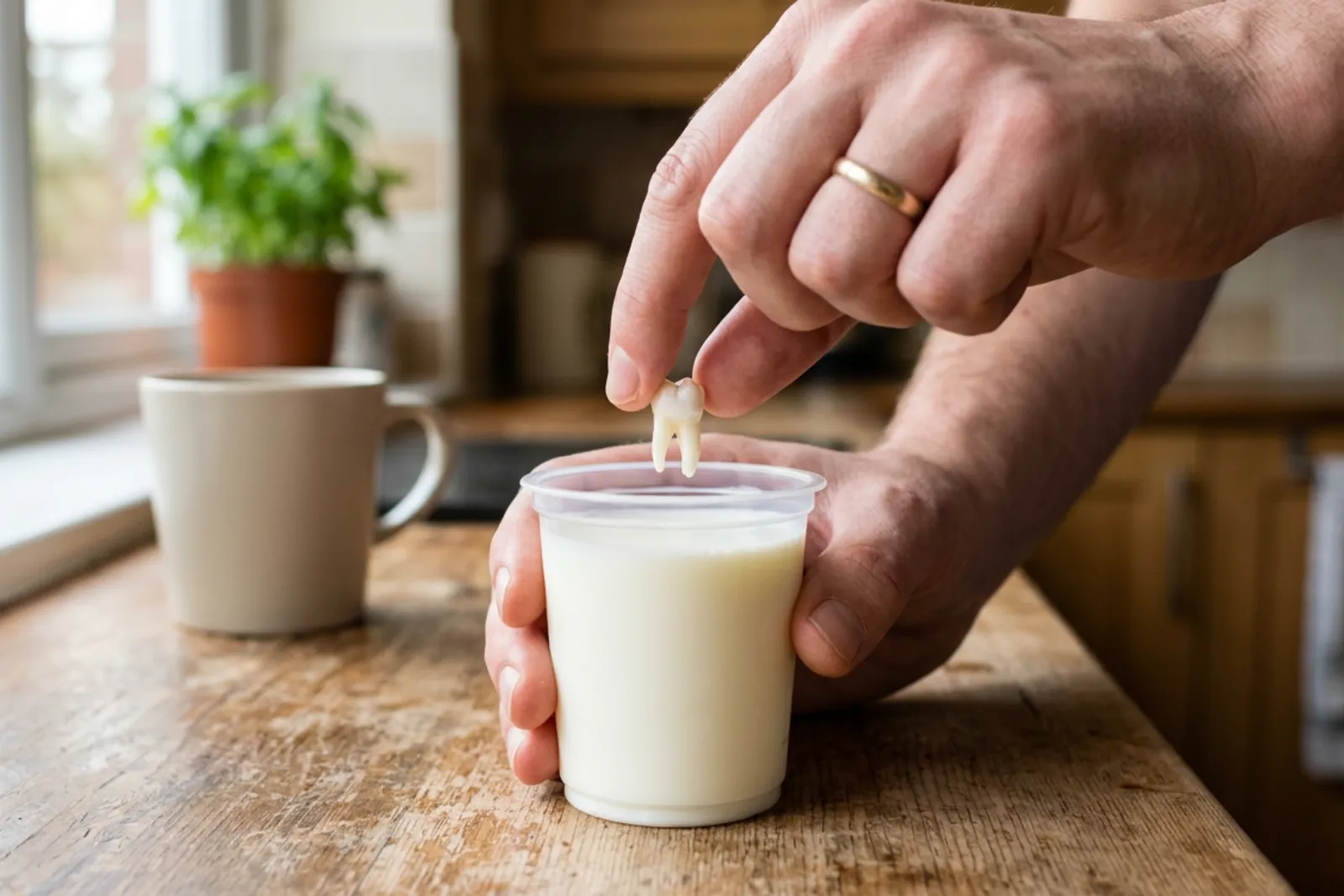
If safe and practical, gently return the permanent tooth to its socket. Otherwise, keep it moist in milk or a tooth-preservation solution.
Contact a dentist immediately and bring the injured person and the tooth for urgent care.
Call 911 or your local emergency number for trouble breathing, life-threatening bleeding, or other signs of a serious injury. Those concerns take priority over saving the tooth.
Check for Injuries Beyond the Missing Tooth
A forceful blow can injure more than one tooth. The lips, cheeks, gums, jaw, and roof of the mouth may also be damaged. A fall or collision can cause a head or neck injury at the same time.
Before focusing on the tooth, check whether the person is alert, breathing comfortably, and able to respond normally. Emergency medical care is needed for loss of consciousness, difficulty breathing, severe or uncontrolled bleeding, or signs of a significant head or neck injury.
Repeated vomiting, confusion, a worsening severe headache, or a visibly misshapen jaw also warrant urgent medical assessment. If a tooth cannot be found and the person is coughing, wheezing, or struggling to breathe, it may have entered the airway. Call emergency services.
Do not spend time searching for a tooth while a serious medical problem goes untreated.
Step 1: Find the Tooth and Control Bleeding
If it is safe to do so, find the tooth promptly. Pick it up by the crown rather than the pointed root.
The root surface carries delicate cells that help the tooth reconnect with the surrounding tissues. Scrubbing the root or allowing it to dry can damage those cells, even when the tooth still looks intact.
Place clean gauze over the bleeding socket and have the person apply gentle, steady pressure. Someone who can bite safely can hold the gauze in place with their teeth. Avoid repeatedly lifting it to check the bleeding, since that can disturb the forming clot.
For a knocked-out baby tooth, maintain pressure for about 15 minutes. If bleeding remains heavy or does not settle with sustained pressure, seek urgent care.
A tooth may look shorter or have an uneven edge because it broke rather than came out completely. Save any fragments and bring them to the dentist. Do not try to dig inside the socket or remove anything embedded in the gum.
Step 2: Decide Whether It Is a Baby or Permanent Tooth
This distinction changes what you should do next.
If it is a baby tooth
Do not put it back into the socket. Replanting a baby tooth can harm the permanent tooth developing underneath it.
Instead, control bleeding with clean gauze and arrange a dental examination. That examination matters even if the tooth was already loose or seemed nearly ready to fall out. The dentist needs to check the gum, nearby teeth, and any damage below the surface.
If it is a permanent tooth
Prompt replantation may give the tooth its best chance of survival. Handle it carefully and move straight to the rinsing and reinsertion steps.
If you are not sure
Children can have a mixture of baby and permanent teeth for several years. The first permanent teeth often appear around age six, so a young child’s knocked-out tooth is not necessarily a baby tooth.
Keep the tooth moist in milk and call a dentist immediately for guidance. Do not guess and force it into the socket.
Step 3: Rinse a Dirty Permanent Tooth Gently
A tooth that lands on a floor, playground, or playing field may have dirt on it. It needs a brief, gentle rinse, not a thorough cleaning.
Hold it by the crown and rinse with milk or sterile saline if readily available. A brief rinse under gently running tap water is also an option when needed. Avoid prolonged rinsing.
Do not use soap, disinfectant, alcohol, or mouthwash. Do not brush the root, scrape off material, or wipe it with a tissue. Tissue that clings to the root may be living tissue rather than debris.
Resist the urge to make the tooth look spotless. Protecting the root surface matters more than removing every visible speck.
Step 4: Reinsert a Permanent Tooth if It Is Safe
For an alert, cooperative person with a clearly identified permanent tooth, immediate reinsertion is usually the preferred first-aid approach.
Hold the tooth by its crown and gently guide it into its original socket, facing the correct direction. Compare it with nearby teeth if that helps. Use light pressure only. Do not force it if it does not slide into place easily.
It may not sit perfectly level. Do not spend time repeatedly adjusting it or trying to achieve an exact fit.
Once it is in place, have the person bite gently on clean gauze or a clean folded cloth to help hold it steady. They still need immediate dental treatment, even if the tooth looks secure and the pain improves.
Do not attempt reinsertion in someone who is unconscious, very drowsy, unable to cooperate, or at risk of swallowing or inhaling the tooth. In those situations, preserve it in a suitable liquid and focus on safe transport.
Step 5: Keep the Tooth Moist if Reinsertion Is Not Possible
Sometimes putting the tooth back feels too difficult. The injured person may be frightened, the socket may be hard to see, or there may be other injuries. Do not let an unsuccessful attempt delay care.
Place the tooth in a clean container with milk. A commercial tooth-preservation solution, such as one containing Hank’s balanced salt solution, is another suitable option. If a preservation kit is immediately available, follow its directions.
Do not wrap the tooth in a dry tissue or leave it exposed to air.
What about saliva or holding it inside the mouth?
An alert adult or older child may be able to hold the tooth between the cheek and gum. However, there is a risk of swallowing or inhaling it, especially if the person is upset or distracted.
A container with milk is usually easier to manage safely. Never store a tooth inside a young child’s mouth or in the mouth of anyone who is drowsy or unconscious.
If milk and a preservation solution are unavailable, saliva collected in a clean container can be a temporary alternative.
Is tap water suitable for storage?
A brief rinse and prolonged storage are different. Plain water is not a preferred storage liquid because it can damage the cells on the root surface. Choose milk or a tooth-preservation solution whenever possible.
Do not use alcohol, mouthwash, or homemade saltwater. Call the dentist for guidance if no suitable storage option is available, and continue arranging immediate care.
How Much Time Do You Have?
Treat a knocked-out permanent tooth as a dental emergency immediately. Do not wait for pain to develop.
Replantation within about 30 minutes gives the tooth a better chance, but the length of time the root stays dry is especially important. After roughly 60 minutes of dry storage, the outlook becomes substantially worse.
There is no reliable two-hour cutoff after which seeking care becomes pointless. A dentist may still recommend replantation or another treatment after a delay, depending on the tooth, the person’s age, and the injury.
The practical message is straightforward: act now, keep the tooth moist, and do not throw it away because you think too much time has passed.
For example, if a permanent tooth is knocked out during a game, putting it promptly into milk while someone calls the dentist is far better than carrying it home in a pocket and looking for an appointment later.
Where to Go for Emergency Dental Care
Call a dentist immediately. Explain that a tooth has been completely knocked out, when it happened, whether it is a baby or permanent tooth, and how it has been stored. These details help the team assess the urgency.
Ask where the person should be seen right away. Do not accept a routine appointment without making the nature of the injury clear.
If you cannot reach a dentist promptly, go to a hospital emergency department. Hospital care is particularly important when there are other facial injuries, suspected jaw damage, uncontrolled bleeding, or concerns about a head injury.
An emergency department may not provide every part of definitive dental treatment, but it can assess serious injuries and help arrange appropriate care. Bring the tooth, even if it is broken or has been out of the mouth for some time.
What Happens During the Dental Visit?
The dentist will examine the socket, neighboring teeth, gums, and bite. Dental X-rays may be needed to look for fractures, displaced teeth, or injuries beneath the gumline.
If a permanent tooth is replanted, the dentist may attach a flexible splint to nearby teeth while the supporting tissues heal. Further treatment depends on the root’s development and the extent of the injury. Root canal treatment is often needed for replanted permanent teeth with fully developed roots.
The clinician may also review tetanus protection, particularly after contact with soil, and decide whether antibiotics are appropriate. Do not start leftover antibiotics on your own.
Follow-up visits are essential. A tooth can look stable while problems develop around its root. Replantation can save a tooth, but it cannot guarantee lifelong survival.
Care After the Initial Treatment
Follow the dentist’s instructions about eating, cleaning, medication, and returning to sports. Soft foods are commonly recommended during early healing, along with avoiding biting directly on the injured tooth.
Keep the area clean using the method the dentist recommends. Do not wiggle the tooth to test whether it has tightened.
Contact the dental team promptly if pain increases, swelling develops, the bite changes, or the tooth becomes more mobile. Fever, spreading facial swelling, or difficulty swallowing needs urgent assessment.
For children, explain what happened in simple, calm language. They may be more worried about another painful experience than about the missing tooth. A clear plan can make the next visit feel less uncertain.
Prepare Before an Injury Happens
A well-fitting sports mouthguard can reduce dental injuries during contact sports and activities with a risk of falls or collisions. Keep emergency dental contact information somewhere easy to find, and consider adding a tooth-preservation kit to a sports or workplace first-aid kit.
The most useful facts to remember are these: never reinsert a baby tooth, handle a permanent tooth only by its crown, and keep it moist if it cannot be put back safely.
Then get help immediately. Careful handling and a quick response give the dentist the best possible starting point.
This information is general first-aid guidance and does not replace an assessment by a dentist or medical professional.
Ready to book your visit?
New patients are welcome Tuesday to Saturday, with Fridays open until 6 PM.
Book an appointment