
How to Evaluate Dental Technology Beyond the Buzzwords
Learn how to evaluate dental technology, from 3D imaging to digital impressions. Discover what to ask about benefits, risks, and costs before treatment begins.
November 4, 2026
“Digital,” “3D,” and “computer-designed” can sound reassuring when you are choosing dental care. But those words do not tell you whether a particular tool will help your tooth, improve your comfort, or change your treatment.
The more useful question is simple: What problem does this technology solve for me?
Sometimes the answer is clear. A three-dimensional scan may show how close an impacted wisdom tooth sits to a nerve. A digital impression may spare someone with a sensitive gag reflex from using a tray of impression material. In other situations, newer equipment may mainly make the office’s workflow faster.
Neither benefit is automatically unimportant. The distinction matters because technology can affect your costs, appointment time, and treatment choices. Here is how to assess common dental tools without needing to become an expert in the equipment.
Start With the Decision, Not the Device
Useful dental technology answers a clinical question or improves a meaningful part of care. Before agreeing to an additional scan or digitally planned procedure, ask your dentist to explain what they expect to learn or accomplish.
For example, an X-ray might help determine whether decay extends between teeth where it cannot be seen directly. A scan for dental implants might help assess available bone and nearby anatomy. A digital model might help plan how a crown will meet the opposing teeth.
A clear explanation should connect the tool to your situation: “We need this image to assess the roots before discussing extraction” is more informative than “We use advanced imaging.”
It is also reasonable to ask what would happen without the technology. Would treatment be less predictable? Would a conventional method provide similar results? Would the dentist need to refer you elsewhere? Those answers help separate a useful investment in care from an optional convenience.
Digital X-Rays: Appropriate Use Matters Most
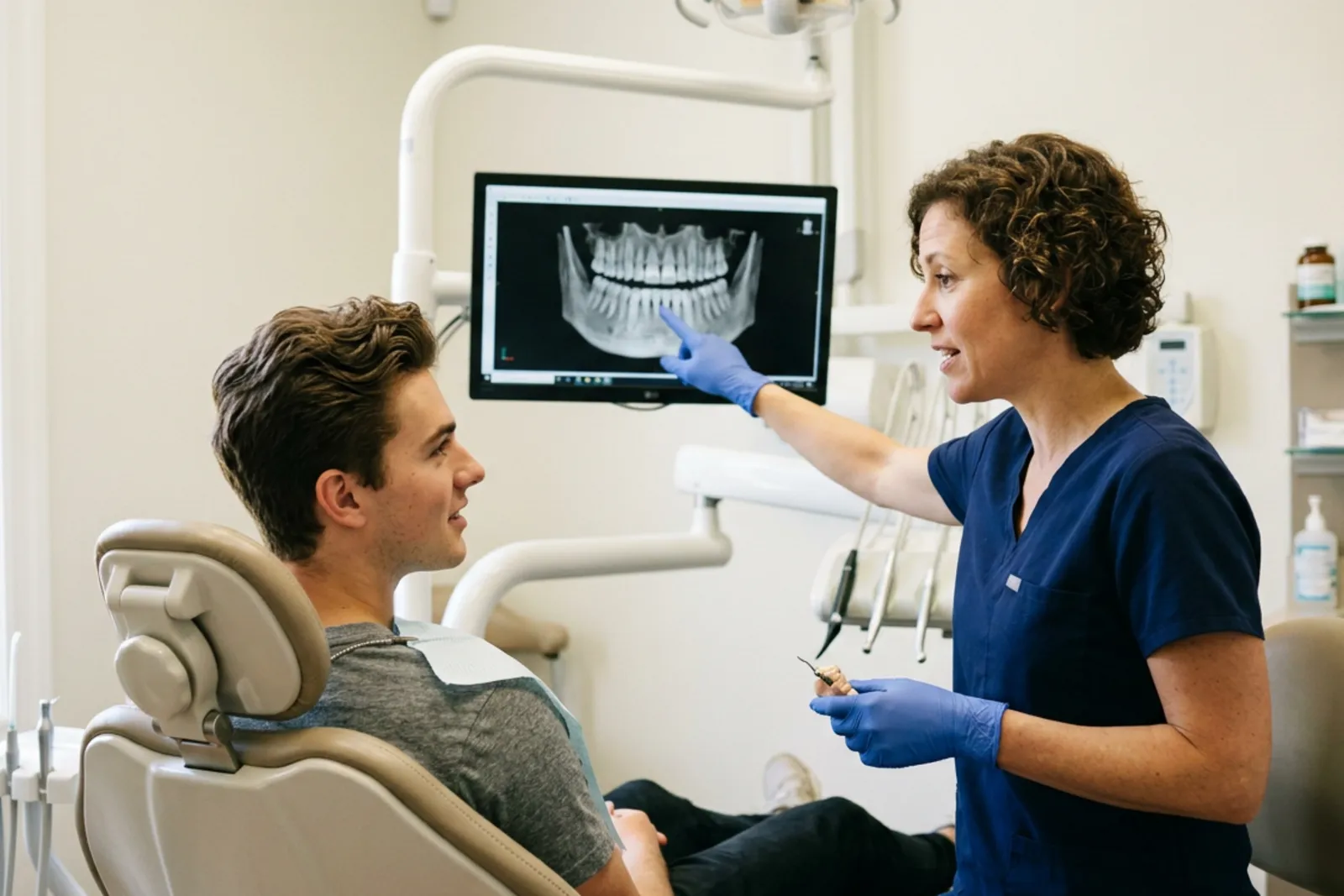
Digital dental X-rays produce images that can be viewed on a screen, stored electronically, and shared with other providers when needed. They can make image review quicker and allow the dentist to adjust brightness or magnification.
However, an image still needs a reason.
The decision to take X-rays should reflect your symptoms, examination findings, dental history, age, and risk of disease. Existing images may also help if they are recent enough and suitable for the question being investigated. Being a new patient does not, by itself, explain why every possible image is necessary.
Radiation exposure varies by imaging method, equipment, settings, and the area examined. Digital systems can reduce exposure compared with some older film techniques, but “digital” does not mean radiation-free.
Ask how the team selects the smallest appropriate imaging area and avoids unnecessary repeat exposures. In children’s dentistry, imaging should likewise be based on individual needs rather than a blanket schedule.
You should also receive an explanation of the findings. Seeing an image can help, but most patients need someone to point out what is normal, what is uncertain, and what may require attention.
When 3D Imaging Adds Useful Information
Three-dimensional dental imaging often refers to cone-beam computed tomography, or CBCT. Unlike an ordinary two-dimensional X-ray, CBCT creates a view of structures that can be examined in multiple planes.
This can be valuable in implant dentistry and certain oral surgery cases. It may help assess bone dimensions, the location of nerves, the relationship between tooth roots and nearby structures, or the position of impacted teeth.
For example, a standard image may suggest that a lower wisdom tooth lies close to a nerve canal. If a CBCT scan could clarify that relationship and change the surgical approach or referral decision, the scan may provide useful information.
That does not make 3D imaging necessary for every extraction or every dental visit. Depending on the scan protocol, CBCT can involve more radiation than conventional dental images. Its use should be justified by the clinical question, with an appropriate field of view and exposure settings.
What a scan cannot promise
A detailed image does not guarantee uncomplicated surgery or a successful implant. Healing, infection, oral hygiene, smoking, medical conditions, and other factors still affect outcomes.
Ask what the scan changes. Does it alter implant size or position? Suggest a need for bone grafting? Indicate that a specialist should assess the case? If the plan would remain the same, your dentist should be able to explain why the additional information is still worth obtaining.
Digital Impressions Are Different From 3D X-Rays
The word “scan” can create confusion because it describes different tools.
An intraoral scanner uses optical technology to record the visible surfaces of teeth and nearby tissues. It does not use ionizing radiation. A CBCT scan uses X-rays to show internal anatomy. The two methods answer different questions and are not interchangeable.
Digital impressions can support crowns, bridges, clear aligners such as Invisalign, and some other appliances. Many patients find them easier to tolerate than traditional impression trays. A clinician may also be able to identify a missing area and rescan it during the same appointment.
Still, accuracy depends on technique and the clinical situation. Saliva, bleeding, difficult-to-see margins, and the extent of the area being scanned can affect the record.
The useful question is whether a digital impression improves comfort, fit, or planning in your case. Ask how the record is checked and what happens if the laboratory needs more information. Traditional impressions remain appropriate for some procedures.
Digital records can also support communication between providers, but file compatibility and access vary. If you expect to transfer care, ask whether the records can be shared in a usable format.
Same-Day Crowns: Convenience With Conditions
A same-day crown can reduce travel, time away from work, and the period spent wearing a temporary crown. For someone with a fractured tooth or a difficult schedule, those are practical benefits.
Same-day treatment generally involves digital scanning, computer-assisted design, and on-site fabrication. Yet speed alone does not establish quality or suitability.
Before making a crown, the dentist must assess the tooth, surrounding gums, remaining tooth structure, and bite. Pain may require further investigation. A tooth may need root canal treatment, gum treatment, or another procedure before the final restoration is appropriate.
Material choice also matters. Different restorative materials have different uses, and some cases benefit from laboratory involvement, particularly when appearance or complexity requires it.
Ask how the dentist verifies the crown’s margins, contacts with neighboring teeth, and bite. Find out what happens if the crown needs adjustment, cannot be fitted that day, or causes persistent symptoms afterward. Repair and replacement policies should be explained rather than assumed.
A shorter timeline is worthwhile when it preserves the necessary checks.
Comfort Often Depends on More Than Equipment
A technically efficient appointment can still feel difficult if you do not understand what is happening or feel unable to pause.
For many patients, clear communication is one of the most useful improvements a dental team can make. Agreeing on a stop signal, explaining sensations before they happen, and allowing breaks can make care easier to tolerate. Headphones, a blanket, or changes in positioning may also help.
Digital equipment can contribute. An optical impression might be more comfortable than a tray, and faster image processing can reduce waiting. But the benefit should be something you actually experience.
Sedation dentistry requires a separate conversation. Nitrous oxide and oral sedatives have different effects, suitability requirements, and recovery instructions. Sedation does not necessarily replace local anesthesia for pain control.
Ask about health screening, medication interactions, monitoring, transportation, and restrictions after treatment. Requirements depend on the medication and level of sedation. You should understand these details before the appointment, not after taking a sedative.
Better Images Should Support Thoughtful Treatment
Technology should support an examination and a conversation, not replace them.
A complete assessment may include your symptoms, medical and dental history, evaluation of teeth and gums, bite assessment, and examination of oral soft tissues. Images add information that the clinician cannot obtain by looking alone.
They do not automatically dictate treatment.
Consider a small area of decay detected during an examination. Depending on whether the surface is intact, whether the lesion is active, your cavity risk, and other findings, the appropriate response may involve prevention and monitoring rather than an immediate filling.
Similarly, a digital smile simulation can help discuss cosmetic dentistry, but it is a planning aid, not a guarantee. Gum health, bite, tooth structure, material limitations, and your preferences still determine what is suitable.
You should leave the discussion understanding what needs prompt attention, what can reasonably wait, and what monitoring would involve. If delaying treatment carries a risk, ask what that risk is and which symptoms should trigger a call.
Understand the Cost Before Agreeing
A technology-related fee may be included in a procedure or billed separately. Neither arrangement tells you whether the charge is reasonable without knowing what it covers.
Request an itemized estimate that distinguishes the examination, imaging, scanning, treatment, laboratory work, and any anticipated additional procedures. Ask whether the technology is essential, recommended, or optional, and whether a conventional approach could provide a clinically comparable result.
Insurance coverage is a separate question from clinical usefulness. A beneficial procedure may not be covered, while a covered service may still have limits, frequency rules, or patient charges.
For patients using the Canadian Dental Care Plan, confirm provider participation, applicable coverage requirements, and any amount you may need to pay. A benefits estimate is not a guarantee of payment. Direct billing also does not necessarily mean there will be no balance.
Possible follow-up costs deserve attention too. Ask about adjustments, repeat scans, replacement appliances, repairs, and specialist referrals before treatment begins.
Ask About the Backup Plan
One of the most revealing questions is: “What would make you change this plan?”
An implant assessment may identify insufficient bone. Removing decay may reveal a deeper problem than expected. A tooth scheduled for a crown may turn out to be unrestorable. Even careful planning cannot eliminate every uncertainty.
A written treatment plan should explain foreseeable alternatives, possible added procedures, and when further consent would be needed. If a finding would exceed the dentist’s scope, ask how referral would work.
Digital systems also need practical backups. Equipment can fail, records can be incomplete, and a restoration may need to be remade. You do not need a technical explanation of every failure scenario. You do need to know whether care would be delayed, changed, or transferred, and how costs would be handled.
Follow-up matters just as much. Ask whom to contact if pain persists, an appliance does not fit, or your bite feels wrong.
A Short Checklist for Your Next Appointment
You do not need to ask every possible question. These are a useful starting point:
What clinical question will this technology answer?
How could the result change my treatment?
Could a simpler method provide enough information?
What are the limitations, risks, and likely comfort benefits?
How will it affect appointment time, total cost, and coverage?
What happens if the findings are unexpected or treatment needs revision?
The best explanation should leave you clearer about your care, not merely impressed by the equipment.
Dental technology is valuable when it helps a clinician make a sound decision or makes treatment meaningfully easier for you. A careful examination, understandable choices, and a workable follow-up plan remain essential, regardless of how new the device is.
Ready to book your visit?
New patients are welcome Tuesday to Saturday, with Fridays open until 6 PM.
Book an appointment