
How to Assess Emergency Dental Care and Know Where to Go
Learn how to assess emergency dental care, spot warning signs, and decide whether to see a dentist or go to the ER. Read this guide before choosing where to go.
October 15, 2026
A sudden toothache or dental injury can make it difficult to decide what to do next. You may be wondering whether you need treatment immediately, whether the problem can wait until morning, or whether a hospital is the safer choice.
The answer depends on more than pain alone. Swelling, bleeding, the type of injury, and changes in breathing or swallowing all help determine urgency. A small, painless chip is different from a knocked-out permanent tooth. A lost crown without swelling is different from an infection spreading into the face or neck.
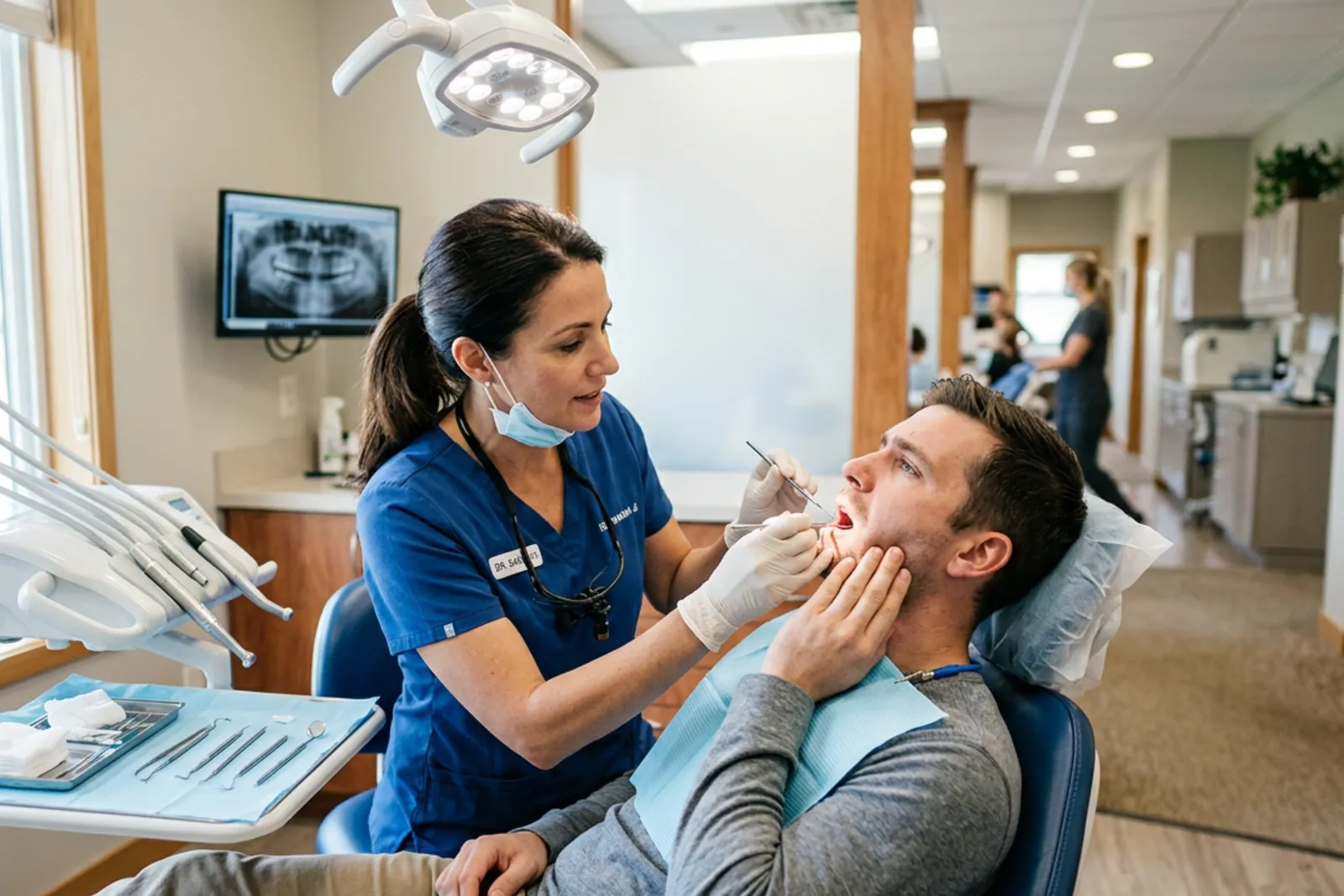
Good emergency dental care begins with clear triage: assessing your symptoms and directing you to the right level of care. Knowing what to report, what to ask, and how to protect an injured tooth can make a stressful situation more manageable.
First, Check for Signs of a Medical Emergency
Before comparing dental appointments, check whether your symptoms require emergency medical care. Dental offices can treat many problems involving teeth and gums, but they are not the right first destination for every injury or infection.
Seek immediate emergency medical care for:
Difficulty breathing or swallowing.
Rapidly increasing swelling of the face, mouth, or neck.
Heavy bleeding that does not stop with firm, continuous pressure.
Major facial trauma, a suspected jaw fracture, or loss of consciousness.
Signs of serious head injury, such as confusion or repeated vomiting after an accident.
Severe illness with fever, marked weakness, or confusion, particularly alongside dental swelling.
Call emergency services if breathing is affected or you cannot travel safely. Do not wait for a dental office to return a message.
Hospital treatment may address airway risks, serious bleeding, or other medical complications. You may still need a dentist afterward to treat the tooth or oral injury that caused the problem.
How Urgent Is Your Dental Problem?
There is no single rule that fits every dental emergency. Pain can be intense without visible swelling, while a badly damaged tooth may initially hurt very little. Symptoms also change.
Use the guidance below to understand the likely urgency, then contact a dental professional for advice specific to your situation.
Severe or Persistent Toothache
A strong toothache can be associated with deep decay, inflammation inside the tooth, infection, or a crack. Pain that interrupts sleep, keeps getting worse, or makes eating difficult deserves prompt assessment.
When you call, explain when the pain began and whether it is constant or triggered by biting, heat, or cold. Mention swelling, fever, drainage, or a bad taste. These details help the dental team assess urgency.
While waiting, an over-the-counter pain reliever may help if it is safe for you. Follow the label and ask a pharmacist if you have medical conditions, take other medications, or are unsure. Never place aspirin directly against a tooth or gum; it can damage the tissue.
Pain relief does not resolve the underlying dental problem. Even if the discomfort settles, keep the recommended appointment.
A Chipped or Broken Tooth
A small chip without pain often needs a prompt dental appointment rather than immediate emergency treatment. Still, it should be checked. The visible damage may not show the full extent of a fracture.
Seek faster assessment if the break causes severe pain, leaves a sharp edge, exposes pink or red tissue inside the tooth, or follows a significant impact. A loose tooth or a change in how your teeth meet also needs urgent attention.
Avoid chewing on the damaged tooth. If you find a fragment, keep it in a clean container and bring it with you. A dentist can determine whether it can be used in the repair.
A temporary repair may be enough to protect the tooth initially. Ask whether the clinic can examine it, take appropriate X-rays, and smooth or cover an edge that is cutting your cheek or tongue.
A Knocked-Out Tooth
A knocked-out permanent tooth is time-sensitive. Getting professional care immediately gives it the best chance of being saved.
Pick up the tooth by the crown, which is the part normally visible in the mouth. Avoid touching the root. If it is dirty, rinse it briefly and gently without scrubbing, scraping, or using disinfectant.
For an alert, cooperative person, a permanent tooth can sometimes be carefully placed back into its socket. Do not force it. If replanting is not possible, keep it moist in milk or a tooth-preservation solution and seek dental care immediately. Saliva collected in a container is another option if those are unavailable. Do not leave the tooth dry.
Do not replant a baby tooth, as this can harm the developing permanent tooth. Avoid storing a tooth inside the mouth of a young child or anyone who might swallow or inhale it.
Call ahead if you can, but do not let a prolonged search for an appointment delay care. Clearly say that a permanent tooth has been knocked out and ask whether the provider can manage dental trauma immediately.
A Lost Filling or Crown
A missing filling or crown can leave a tooth sensitive and vulnerable to further damage. The urgency depends on pain, swelling, the condition of the tooth, and whether a loose restoration poses a swallowing risk.
Save the crown if you have it and bring it to the appointment. Avoid chewing on that side, and do not use household glue to put it back.
A dentist may be able to provide temporary protection or replace the restoration, but the underlying tooth needs assessment first. Decay or a fracture may explain why it came loose.
If there is severe pain or swelling, mention that when calling rather than describing the problem only as a lost crown.
Swelling or a Possible Dental Abscess
A dental abscess may cause pain, swelling, a gum bump, drainage, or a bad taste. Fever can occur, but an infection does not always cause fever.
Arrange prompt professional evaluation. Do not try to drain the swelling yourself. Warm saltwater rinses may ease some irritation, but home care cannot remove the source of a tooth infection.
Antibiotics are not always needed, and they do not replace treatment of the affected tooth. Depending on the diagnosis, care may involve drainage, root canal treatment, or removal of the tooth.
If swelling spreads quickly or affects breathing or swallowing, seek emergency medical care immediately.
Cuts and Orthodontic Injuries
Cuts to the lips, tongue, cheeks, or gums can bleed heavily. Apply firm, continuous pressure with clean gauze or a clean cloth. Avoid repeatedly lifting it to check, since that can disrupt clotting.
Heavy or persistent bleeding, deep wounds, and injuries after major facial trauma require urgent medical assessment.
For a poking orthodontic wire, orthodontic wax can protect the surrounding tissue temporarily. Contact your orthodontist or dentist for instructions. Avoid pulling at a wire or attempting repairs without guidance, especially if part of the appliance is embedded in tissue.
What to Ask an Emergency Dental Provider
Once you have ruled out signs requiring immediate medical care, the next question is whether a dental provider can assess and manage your particular problem. “Emergency appointments available” is useful information, but it does not tell you everything.
How Does the Clinic Triage Calls?
Ask whether a dental professional reviews urgent symptoms and how quickly you should expect a response. Give a clear description rather than simply saying, “I have a dental emergency.”
For example: “My lower right tooth has hurt since yesterday, the pain kept me awake, and my cheek is now swollen” is more useful than “I need an appointment.”
A sound triage process distinguishes problems that need immediate care from those that can safely wait. It should also identify symptoms that belong in a hospital rather than a dental chair.
What Does Same-Day Availability Mean?
Confirm whether the clinic has a definite appointment, a cancellation list, or only a brief assessment available. Ask how soon you are likely to be seen and whether treatment may be possible during that visit.
An emergency examination does not always lead to a complete repair the same day. The dentist may first relieve pain, protect the tooth, or manage infection, then schedule definitive treatment.
That can be appropriate. What matters is understanding what the visit is likely to include and what happens next.
If you are looking for a White Rock dentist or searching in South Surrey or elsewhere in Surrey, confirm actual availability before traveling. Location matters, but so does whether the provider can treat your injury.
Can the Clinic Diagnose and Stabilize the Problem?
Ask whether appropriate dental X-rays can be taken during the visit and whether the clinic can provide the likely immediate care.
That might mean protecting a fractured tooth, placing a temporary restoration, managing an infection, or assessing a displaced tooth. Dental trauma deserves a specific question: does the provider treat these injuries directly, or will you need a referral?
More technology is not automatically better care. Some cases need advanced imaging, but many can be assessed with an examination and standard dental X-rays. The imaging should match the clinical need.
What Happens After Hours?
Check the clinic’s current hours and ask what to do if symptoms worsen after it closes. Weekend availability should be confirmed, not assumed.
Useful instructions may include an after-hours telephone number, a referral service, or advice about when to go directly to emergency medical care. An online appointment form is not a reliable substitute for urgent contact unless the response time is clear.
Before leaving an emergency visit, make sure you know which symptoms require another call and which require immediate medical attention.
Make Costs and Payment Clear
It is reasonable to ask about fees before attending. Find out the cost of the emergency examination and whether imaging or temporary treatment is charged separately.
The provider may not be able to quote a final treatment cost before examining you. However, you can ask for an explanation of the proposed care and an estimate once the diagnosis is clearer.
Confirm accepted payment methods and how insurance claims are handled. Direct submission of a claim does not necessarily mean the insurer will cover the entire bill or that no payment is due at the appointment.
If you use the Canadian Dental Care Plan, confirm provider participation and possible patient charges. Eligibility and coverage do not mean every procedure is fully paid.
Do not delay emergency medical care for breathing difficulty, uncontrolled bleeding, or serious trauma while trying to resolve payment questions.
Prepare for the Call and Appointment
A little preparation helps the team make a safer decision. Have the following information ready:
Your main symptom, when it started, and whether it is worsening.
Pain intensity, location, and triggers.
Any swelling, fever, bleeding, drainage, or bad taste.
Details of a broken, loose, displaced, or knocked-out tooth.
How an accident happened and whether there was a head injury.
The patient’s age, medical conditions, medications, and allergies.
Mention blood thinners, immune-suppressing medicines, and conditions that affect bleeding or infection risk. Do not stop prescribed medication on your own.
For a child, explain whether the injured tooth is a baby tooth or permanent tooth, if you know. Bring any tooth fragments or lost restoration with you. If you are anxious about dental care, say so when booking. The team can explain what to expect and discuss appropriate comfort measures.
Choose Clear Guidance Over Reassuring Labels
The most useful emergency dental option is one that explains how urgently you need care, what it can do, and where you should go if your symptoms exceed its capabilities.
You should come away with a practical plan: when you will be assessed, how to protect the tooth while waiting, and what changes mean you need help sooner.
You do not need to diagnose the problem yourself. Your job is to recognize warning signs, describe symptoms accurately, and seek the appropriate assessment. When breathing, swallowing, serious bleeding, or major trauma is involved, choose emergency medical care. For other urgent dental problems, prompt professional triage is the safest next step.
Ready to book your visit?
New patients are welcome Tuesday to Saturday, with Fridays open until 6 PM.
Book an appointment