
Comparing Surrey Dental Implant Costs: What Your Quote Should Include
Compare Surrey dental implant costs with confidence. Learn what a complete quote should include, from imaging and surgery to the final restoration and aftercare.
October 26, 2026
Comparing dental implant prices can feel confusing. One estimate lists a single fee, another separates surgery and the crown, and an advertisement promotes a starting price far below both. Those numbers may describe different stages of treatment.
For patients in Surrey, White Rock, South Surrey, Delta, and Langley, the most useful comparison is the estimated cost of a completed treatment plan. That means knowing what replaces the missing teeth, which procedures are needed, and what happens after surgery.
This guide explains common implant options, general price ranges, insurance considerations, and the questions that make written estimates easier to compare. The figures are planning guides, not guaranteed local fees. Your oral health and proposed restoration determine the actual cost.
What Are You Paying for With a Dental Implant?
A dental implant replaces a missing tooth root. Usually made of titanium, it is placed in the jawbone, where the surrounding bone heals against its surface through a process called osseointegration.
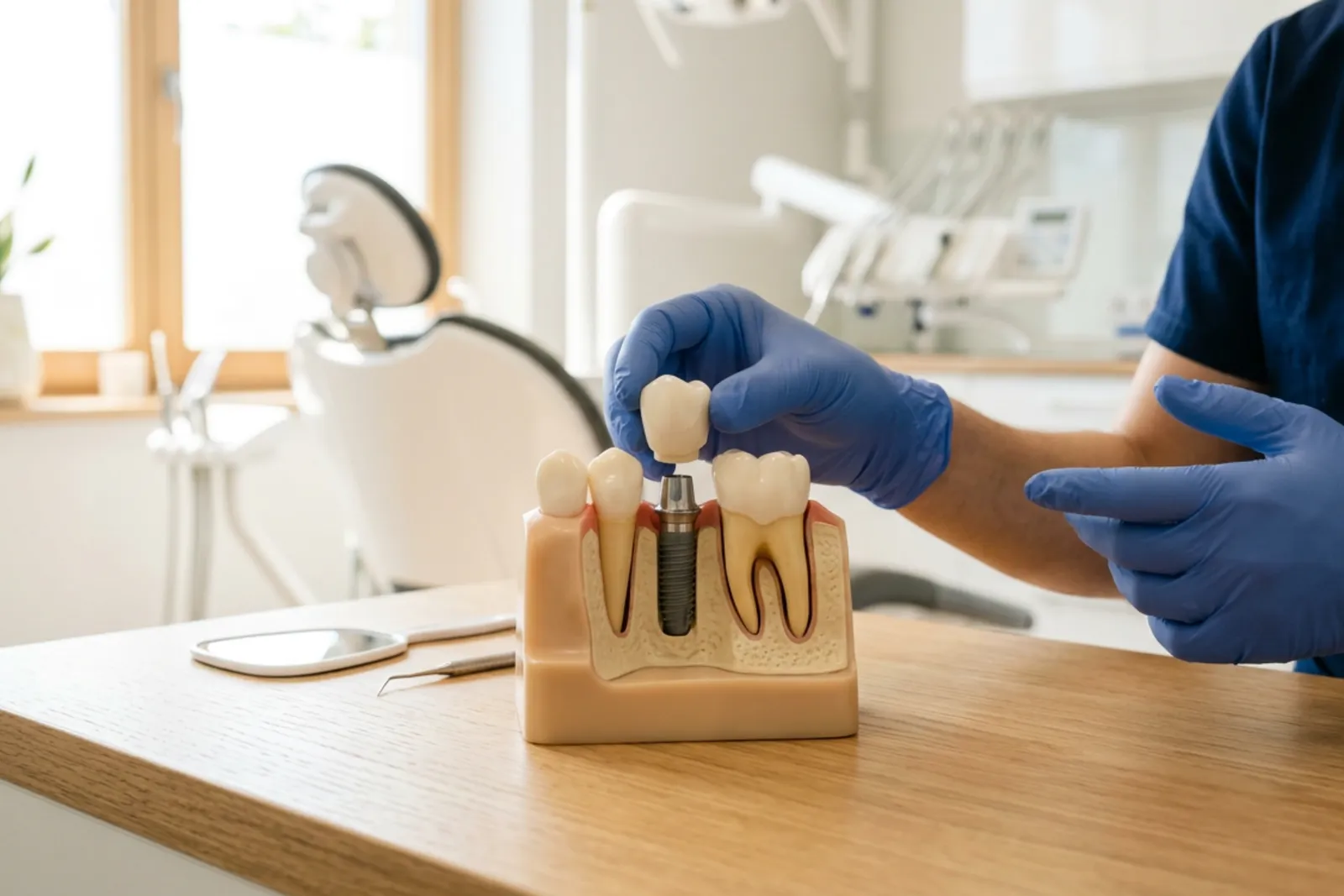
The implant is only one part of the replacement tooth. A complete single-tooth restoration generally includes:
The implant post, also called the fixture, placed in the jawbone.
The abutment, which connects the implant to the replacement tooth.
The crown, which is the visible tooth used for chewing.
An advertised “implant price” may cover only the post and its surgical placement. The abutment and crown may be billed later.
That distinction matters more than the size of the advertised discount. A lower surgical fee does not necessarily mean a lower total treatment cost.
General Dental Implant Cost Ranges in Surrey
The following Canadian-dollar ranges are useful starting points for discussing treatment in Surrey and nearby communities. They are broad estimates rather than a verified regional fee schedule, and individual quotes may fall outside them.
TreatmentGeneral planning range in CADComplete single implant with post, abutment, and crown$3,500 to $4,900Three-unit implant-supported bridge$8,000 to $12,000Fixed full-arch implant treatment, per arch$20,000 to $30,000Implant-retained removable denture, per arch$6,000 to $15,000Bone grafting, when required$500 to $3,000
“Per arch” means either the upper or lower set of teeth. Treatment for both arches requires separate planning and a higher total investment.
Some advertisements start around $2,300. Such prices may apply to a limited surgical service or a straightforward case, rather than a completed replacement tooth. Ask for the full written estimate before treating that figure as your budget.
Claims that Surrey is consistently cheaper than downtown Vancouver also deserve caution. Meaningful comparisons require similar treatment scope, materials, and aftercare. Location alone cannot tell you whether a quote is good value.
How the Type of Restoration Changes the Cost
Replacing one missing tooth
A single implant supports one crown without requiring the neighboring teeth to be reshaped, as a conventional tooth-supported bridge often does.
Costs depend on the surgical difficulty, available bone, crown material, and position of the tooth. A front tooth may need careful management of the gumline and temporary restoration. A back tooth needs planning for chewing forces and available space.
A quote should identify the implant, abutment, and final crown, even if they are bundled into one fee.
Replacing several adjacent teeth
An implant-supported bridge can replace several missing teeth without placing an implant at every missing-tooth site. In suitable cases, two implants may support a bridge replacing three or four teeth.
This can reduce the number of surgical sites and may cost less than individual implants for every tooth. However, suitability depends on the length of the gap, bite forces, bone support, and restoration design.
Check how many implants and replacement teeth are included. Two quotes described simply as an “implant bridge” may cover quite different work.
Replacing a full arch with fixed teeth
Fixed full-arch treatment uses several implants to support a complete upper or lower bridge. Four implants may be suitable for some patients; others need a different number or arrangement.
Selected patients can receive fixed temporary teeth on the day of surgery. That does not mean the entire treatment is finished in one visit. Healing, dietary restrictions, adjustments, and delivery of the final bridge still follow.
The estimate should clearly distinguish the provisional bridge from the final restoration. It should also explain whether removal of failing teeth is included.
Stabilizing a removable denture
Implant-retained dentures attach to implants but remain removable for cleaning. They often require a lower initial investment than a fixed full-arch bridge.
Two implants are commonly used to retain a lower denture. Upper dentures often need more support, and the design varies with the patient's anatomy.
Attachments can wear and need replacement. Dentures may also need adjustments, relines, or eventual replacement, so ask about expected maintenance costs.
Why Two Patients Can Receive Different Estimates
The number of missing teeth is only part of the calculation. Two people replacing the same tooth may need different procedures.
Bone grafting and sinus procedures
Bone can shrink after a tooth is lost. If there is insufficient bone for the planned implant, grafting may be recommended before or during implant placement.
In the upper back jaw, the position of the sinus can limit available bone height. A sinus lift may be needed in some cases. Its cost may be separate from a routine bone-grafting estimate.
Angled implants can reduce the need for grafting in selected full-arch cases, but they are not a universal substitute. The decision depends on anatomy and the planned restoration.
Imaging and surgical planning
A clinical examination and appropriate imaging help establish whether an implant can be placed safely. Three-dimensional CBCT imaging can show bone dimensions and the locations of nearby nerves, roots, and sinuses.
Some plans include a surgical guide made using digital planning. Others use a different placement approach. Ask whether imaging, interpretation, planning, and any guide are included in the estimate.
Extractions and sedation
A damaged tooth may need removal before implant placement. Extraction complexity and the possibility of placing the implant immediately affect the plan.
Sedation is another potential expense. Local anesthesia and sedation are different services, and sedation fees may depend on the method, appointment length, and monitoring required.
Discuss comfort needs early. It is better to include them in the original budget than discover a separate charge shortly before surgery.
How to Compare Written Implant Quotes
Start by confirming that both clinicians are proposing the same treatment. A removable implant-retained denture and a fixed bridge are not equivalent, even if both replace a full arch.
Then use a short checklist:
Confirm the endpoint. Does the total include the final crown, bridge, or denture, rather than surgery alone?
Check quantities and materials. How many implants, abutments, and replacement teeth are included? What material is planned for the final restoration?
Identify separate fees. Ask about imaging, extractions, grafting, sedation, surgical guides, and temporary teeth.
Review aftercare. Which healing checks and adjustments are included, and what maintenance will be billed separately?
Ask about changes. What could increase the estimate, and how will additional treatment be discussed and approved?
A hypothetical example shows why this matters. One quote lists $2,400 for implant placement, then charges separately for the abutment and crown. Another lists $4,600 for the completed tooth. The first headline price is lower, but neither quote can be compared fairly until all components are counted.
Also ask who performs each stage. If surgery and restoration take place at different offices, confirm that you have estimates for both.
Insurance, Public Coverage, and Payment Options
British Columbia medical coverage
British Columbia’s Medical Services Plan generally does not pay for routine dental implant replacement. Certain medically necessary hospital or surgical services may follow different rules, but patients should not assume that routine implant treatment qualifies.
Private dental insurance
Workplace and private plans vary considerably. Some contribute toward implant treatment under major restorative benefits; others exclude implants or calculate reimbursement using the cost of an alternative treatment.
Annual maximums, deductibles, waiting periods, and replacement restrictions can all affect payment.
Request a predetermination before treatment. It provides an estimate of expected reimbursement, although it is not an unconditional guarantee of payment. Ask how a treatment sequence that crosses benefit years would affect your coverage.
Canadian Dental Care Plan
Dental implants and implant-related services are excluded from Canadian Dental Care Plan coverage. Other dental needs, such as certain examinations, extractions, or conventional dentures, may be covered separately when eligibility and program requirements are met.
Do not assume that a service will qualify simply because it occurs before implant treatment. Confirm the specific procedure through official program information and the treating office.
Tax credits and financing
Eligible dental expenses, including qualifying implant treatment, may count toward the Medical Expense Tax Credit. The benefit depends on your eligible unreimbursed expenses, income, and applicable thresholds. Keep detailed receipts and seek tax advice for your circumstances.
Financing can spread payments over time, but compare the total repayment amount. Interest, administrative fees, promotional periods, and early-payment terms matter more than the monthly payment alone.
What Happens During the Consultation?
A useful consultation addresses both oral health and practical concerns. The clinician will assess the remaining teeth, gums, bite, and available bone, along with relevant medical history.
Smoking, diabetes control, previous gum disease, and some medications can affect healing or treatment decisions. Share your medication list, including osteoporosis medicines and other treatments that may influence bone health. Do not stop prescribed medication without advice from the prescribing clinician.
You should leave with an explanation of your options, expected sequence, approximate timeline, and estimated costs. Alternatives may include a tooth-supported bridge, a removable partial denture, or a conventional complete denture.
Implants are useful, but they are not the right choice for every person or every missing tooth.
Treatment Time and Long-Term Costs
Many single-implant cases take approximately three to eight months from implant placement to the final crown. Treatment can take longer if extractions or grafting require separate healing periods.
Immediate temporary teeth are possible in selected cases when the implants have adequate initial stability. They are not guaranteed, and temporary restorations usually come with restrictions on chewing.
Long-term care also belongs in the budget. Implants cannot develop cavities, but the surrounding tissues can become inflamed or lose bone. Crowns can chip, screws can loosen, and denture attachments can wear.
Regular professional care and careful daily cleaning remain necessary. Ask which cleaning tools suit the restoration and whether a night guard is appropriate if you clench or grind your teeth.
Choosing Value Without Relying on Price Alone
For someone comparing a White Rock dentist with offices in Surrey, Cloverdale, or elsewhere in Metro Vancouver, travel deserves consideration. Implant care may involve consultations, surgery, healing checks, restoration appointments, and later maintenance.
A lower fee farther away may still be worthwhile. It may also become less convenient if frequent adjustments are needed.
Compare the clinician’s relevant training and experience, the explanation of risks and alternatives, the materials proposed, and access to follow-up care. Ask how complications or implant failure would be handled and which costs would remain your responsibility.
The most useful quote is one you can understand: a defined treatment, a realistic timeline, clear inclusions, and an explanation of what might change. That gives you a sound basis for deciding whether the plan fits your health needs and budget.
Ready to book your visit?
New patients are welcome Tuesday to Saturday, with Fridays open until 6 PM.
Book an appointment